

Biographical overview
1624: Giacomo Gallicio (20 Greek manuscripts)
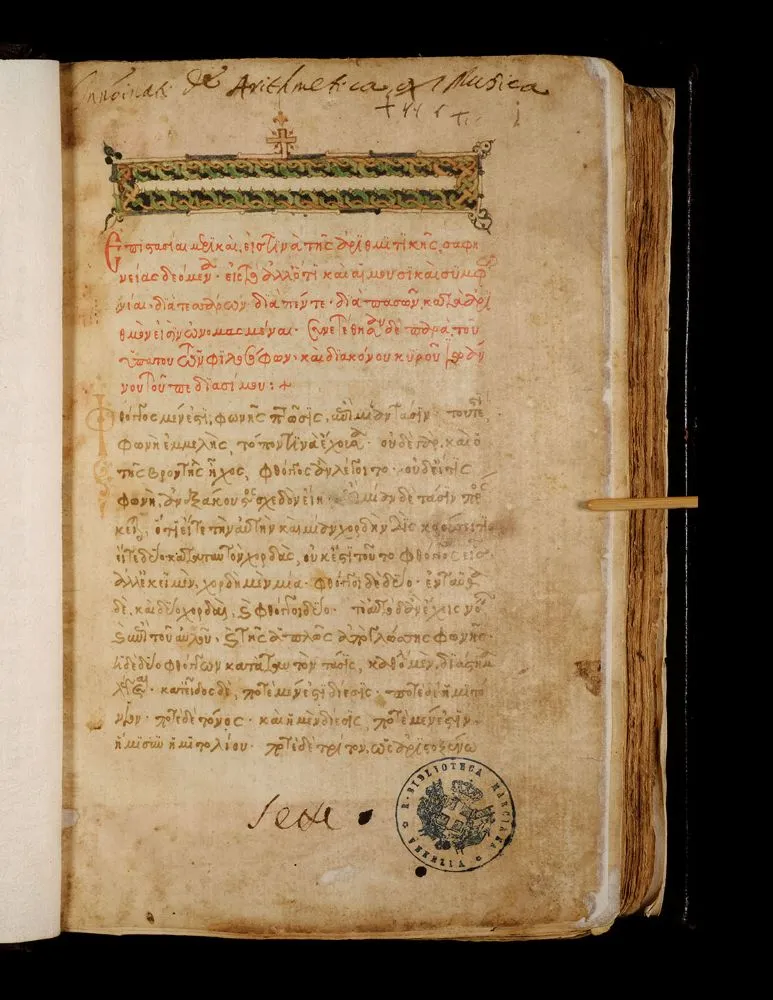
Giacomo Gallicio, active in the seventeenth century, was most likely a merchant who, as was common at the time, acquired several manuscripts during commercial journeys to Constantinople.
The donation
On 23 August 1624, Gallicio submitted a petition to the Heads of the Council of Ten, offering—in exchange for the release of Bernardino Vespa, a distinguished citizen of the Republic convicted of affray—“several ancient books written in Greek characters”.
Following the favourable opinion of Giovanni Sozomeno and Paolo Sarpi, who had been commissioned by the Reformers of the University of Padua to examine the volumes, the manuscripts were transferred the following year to the Library of St Mark.
Extent and composition
In 1625, twenty-one volumes containing approximately ninety titles entered the Library. The texts are predominantly exegetical, philological, and philosophical in character. Among them, particular prominence is given to the Catena in Job (Ms. Gr. Z. 538 = 540), a copy of the Book of Job with commentary, richly decorated with thirty miniatures illustrating episodes from the life of the biblical figure.
On fol. 246r, the copyist states that he completed the manuscript in the year 6413 from the Creation of the world (corresponding to 905 in the Christian era).
The declaration of receipt of the codices in the Libraria Publica, signed by Sozomeno, is dated 13 March 1625.
Four additional manuscripts—attributed to Gallicio on the basis of internal annotations—subsequently entered the Marciana collections by other means.
Further reading
-
Marcello Finazzi, “La donazione della raccolta di codici greci di Giacomo Gallicio alla Repubblica di Venezia,” in Miscellanea Marciana di Studi Bessarionei, Padua, Antenore, 1976, pp. 103–118.