

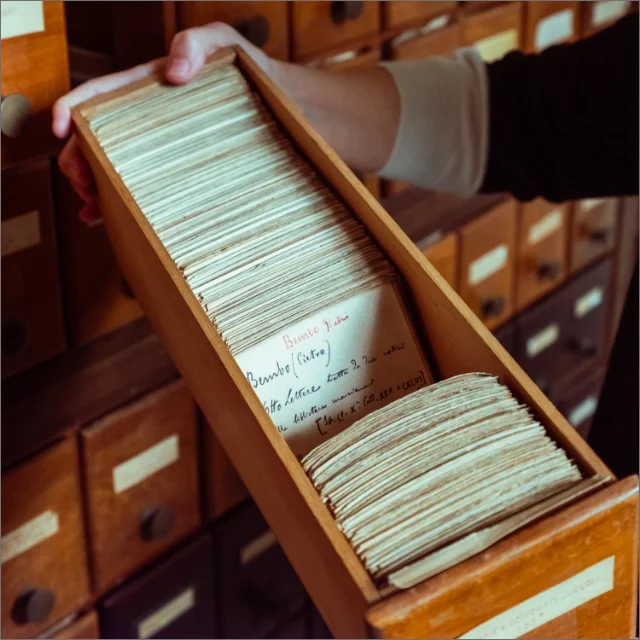
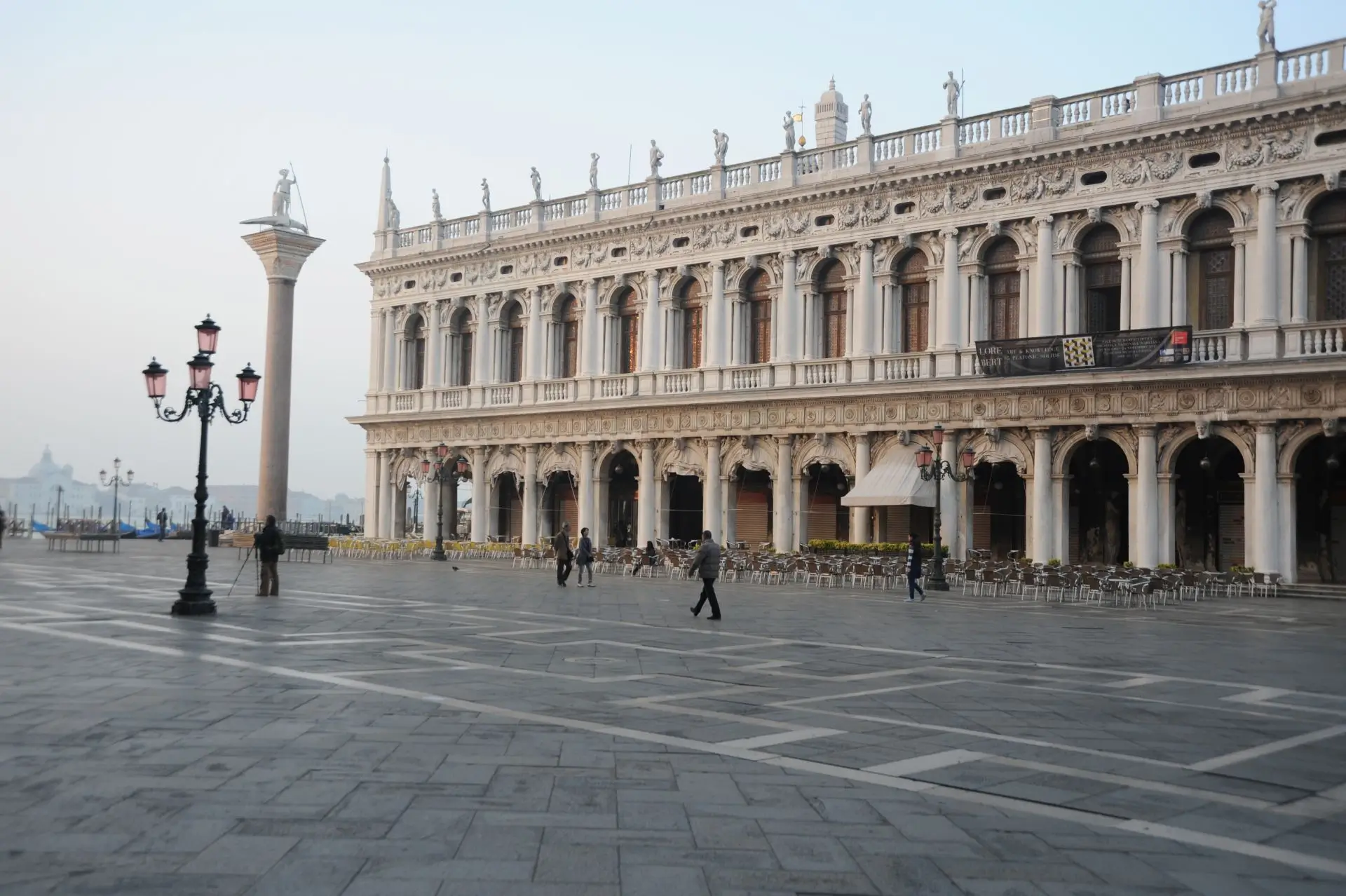
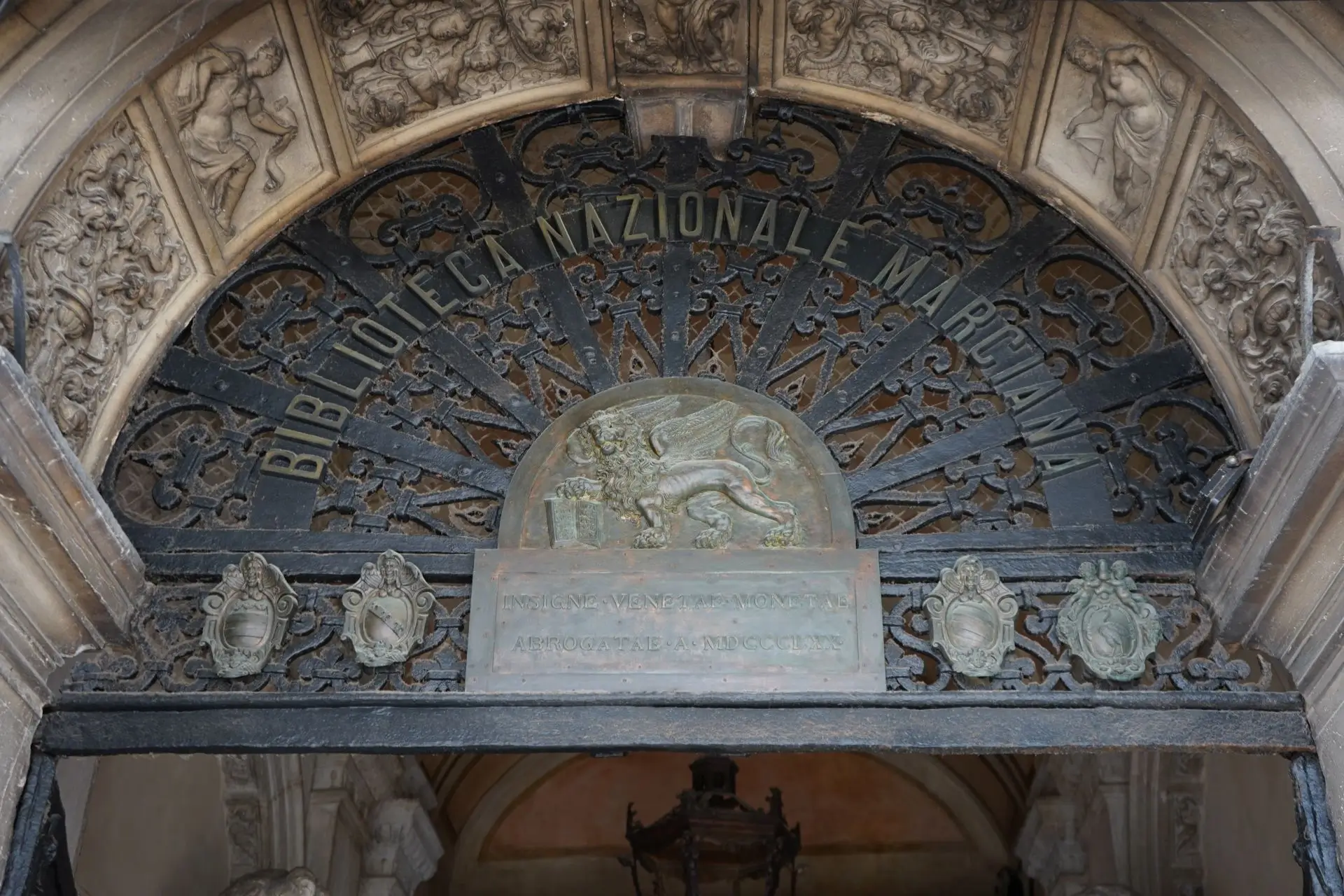
Main seat of the Biblioteca Nazionale Marciana
The Mint (Zecca), where the Republic’s coins were struck and where the State treasury and private deposits were safeguarded, has occupied the same site in St Mark’s Square since the second half of the thirteenth century, following its transfer from the Rialto area.
The damage caused by the fire of 1532, together with the ongoing fire risk posed by the building’s wooden structure, led to the decision to rebuild it in Istrian stone. The commission was entrusted to Jacopo Sansovino, who began work in 1537 and completed it in 1547.
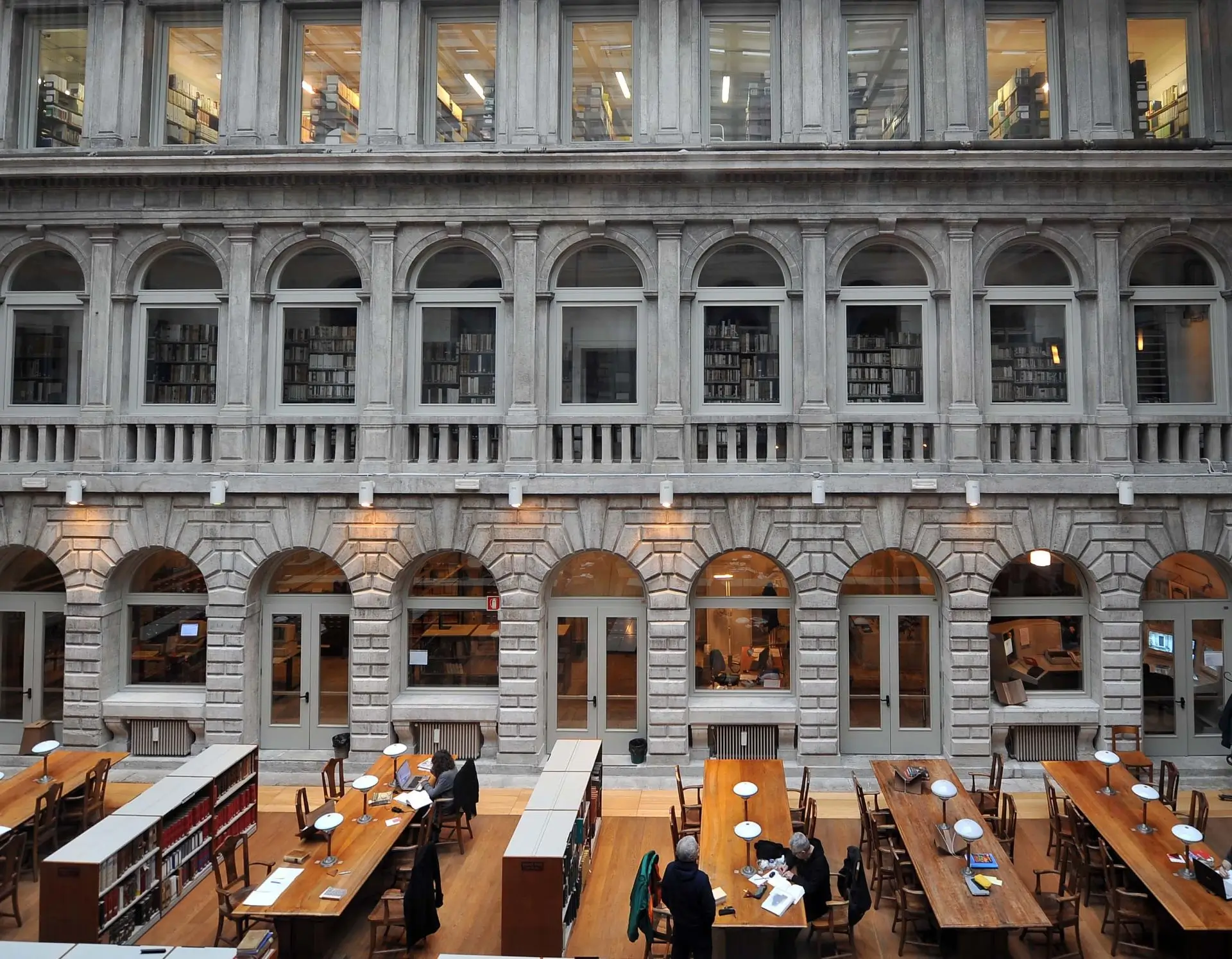
The original structure consisted of a single storey, characterised by rusticated masonry at ground level and a Doric order above. The building encloses a large internal courtyard, onto which open thirty rusticated arches, giving access to forges, workshops, and storerooms.
At the centre of the courtyard stood a monumental well designed by Sansovino, surmounted by a statue of Apollo holding gilded rods, executed by Danese Cattaneo (now preserved in the courtyard of Ca’ Pesaro).
In 1558, it was decided to add a further storey in the Ionic order; the roof was covered with lead sheets.
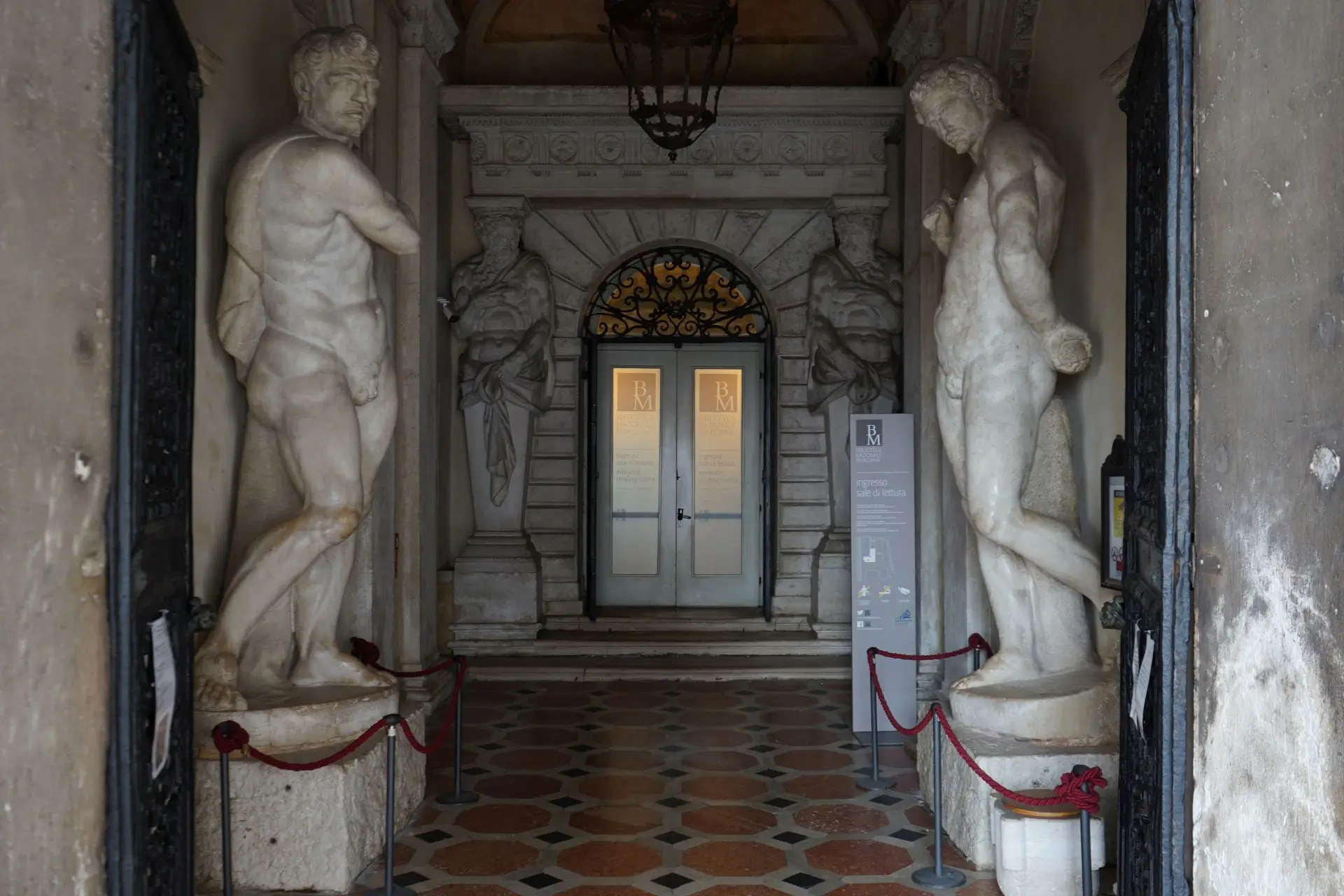
When Vincenzo Scamozzi continued the construction of the Sansovino Library towards the Molo (the waterfront quay of St Mark’s), it became necessary to provide the Mint with a new entrance entrance that connected it to the portico and reflected the dignity of the institution it housed. Scamozzi designed a passageway aligned with the seventeenth arch of Sansovino’s portico, leading to a severe portal flanked by two telamons. Two colossal figures by Gerolamo Campagna and Tiziano Aspetti were installed as symbolic guardians of the Mint.
An eighteenth-century coining press from the Mint’s original furnishings is still preserved and on display in the Orientation Office on the ground floor of the Library. On the first floor, a room houses the historic coffers of the Republic, made of wood reinforced with iron studs.
Reading Rooms
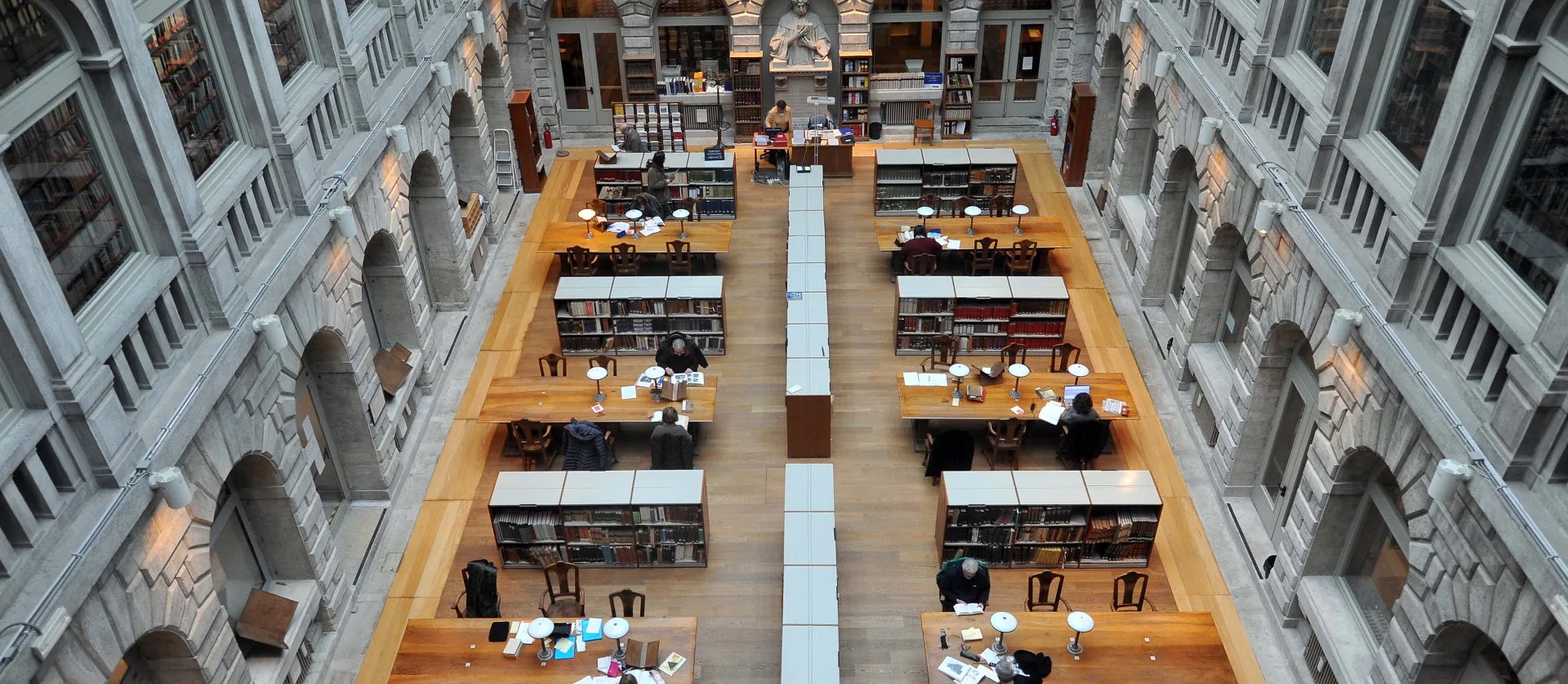
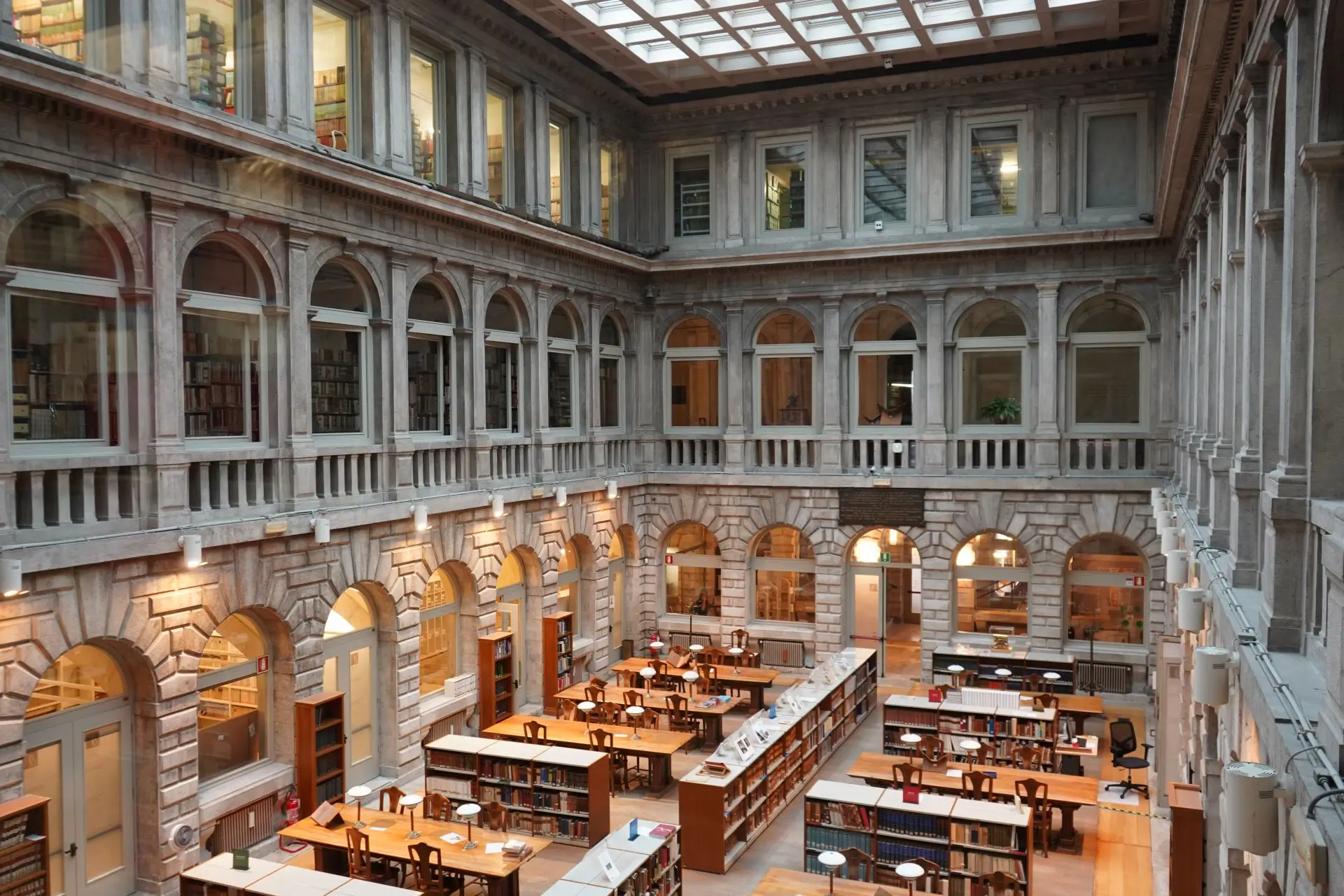
The Library’s reading room for printed materials is located in the courtyard of the Mint, which was roofed over in 1904 with a structure combining glass, concrete, and wood.
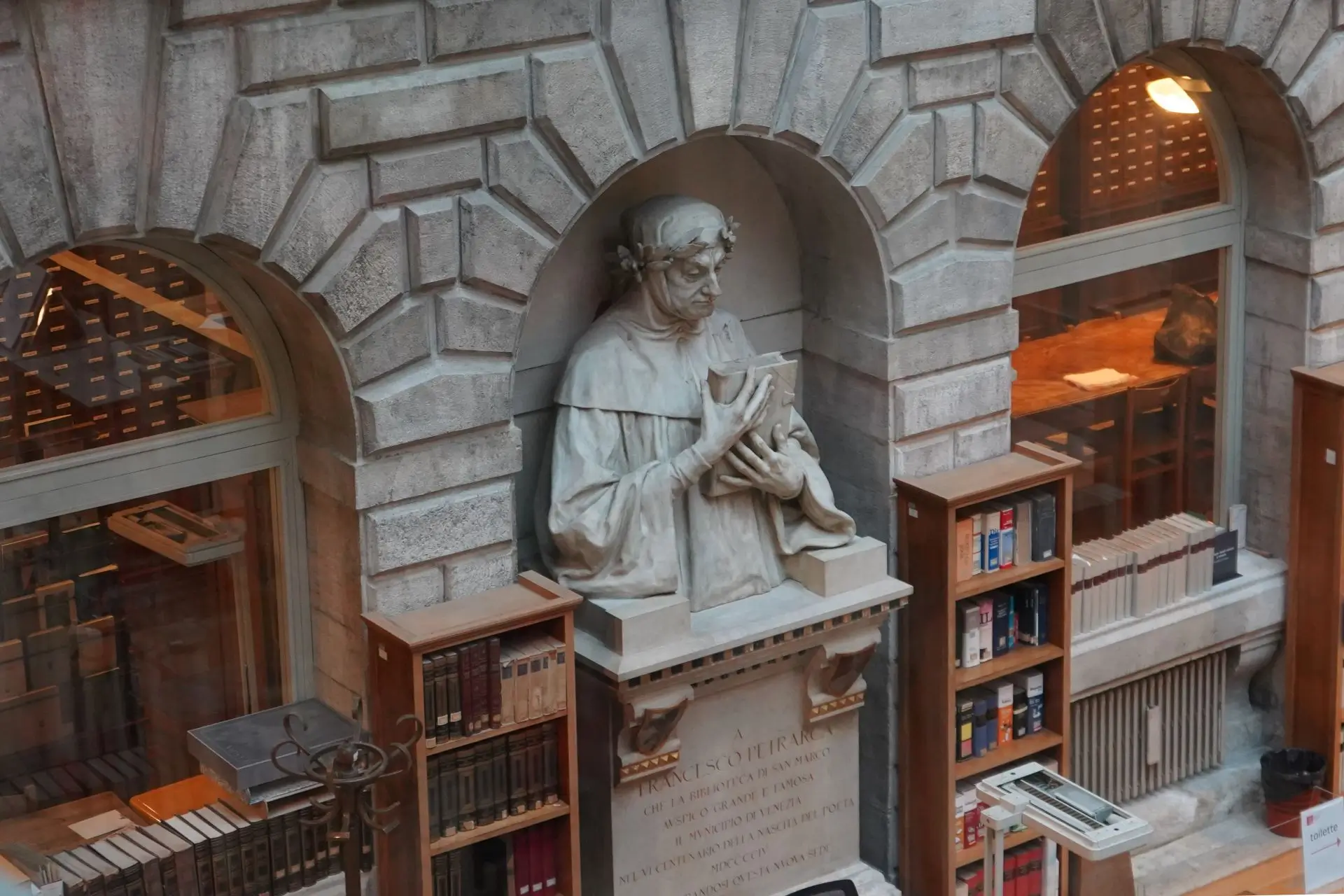
At the rear of the hall stands a statue of Francesco Petrarca by the sculptor Carlo Lorenzetti, commissioned by the City of Venice in 1904 to mark the sixth centenary of the poet’s birth and installed on 27 April 1905.
This space houses the distribution and loan services for printed materials, as well as the catalogue area for printed works.
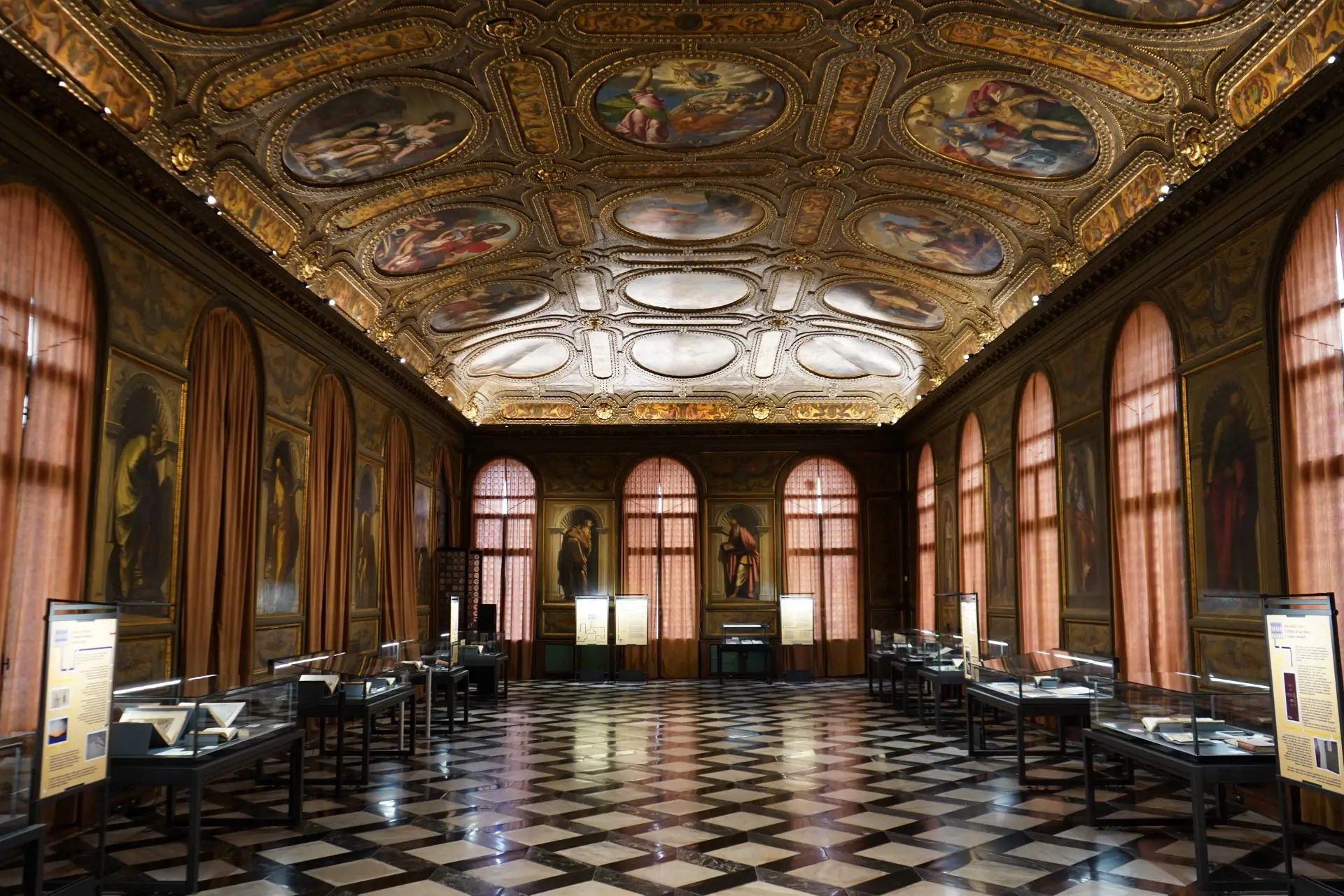
The reading room for manuscripts and rare books, located on the ground floor towards the Bacino, was enriched during the conversion of the Mint into a library with ceiling decorations by the painter Luigi Pasinetti
At the centre is the Lion of St Mark, encircled by the names of the Librarians; a similar decorative scheme was executed in the adjacent large hall.


The Bessarion Room
On the upper floor, the Bessarion Room features further pictorial decorations by Luigi Pasinetti, highlighting the names and coats of arms of the Library’s principal benefactors.
The nineteenth-century bookcases, commissioned in 1887 by the Library’s prefect Carlo Castellani for the installation of a permanent exhibition of Venetian typography in a room of the Doge’s Palace, were adapted to fit the walls of this space.
The room was inaugurated by Margherita of Savoy, an event commemorated by the plaque placed above the entrance.