

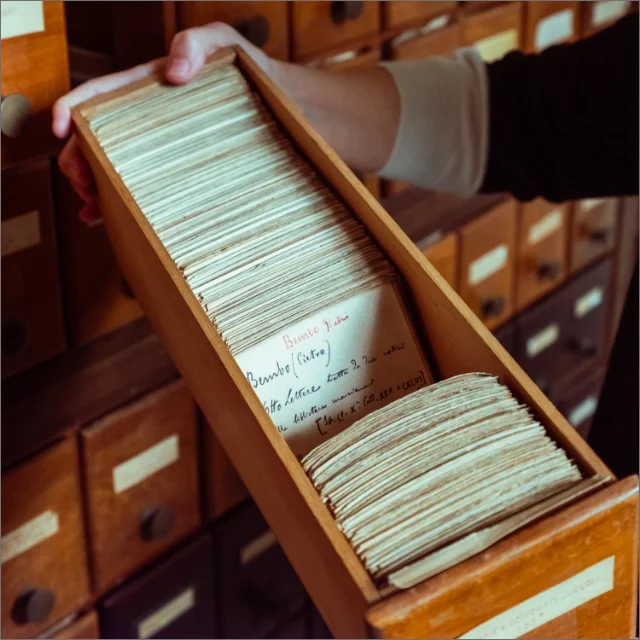
A gift never made, but legendary
Biography
A man of letters and an early humanist, the Tuscan Francesco Petrarca (Arezzo, 1304 – Arquà, 1374) studied in Avignon, Montpellier, and Bologna.
The minor orders enabled him to devote his life to the study of the classics and to literary and poetic composition.
His international contacts during the papal residence in Avignon, his frequent travels and various residences, his close association with leading intellectuals, and his passionate commitment to Latin literature made him a central figure among the precursors of Humanism.
His bequest
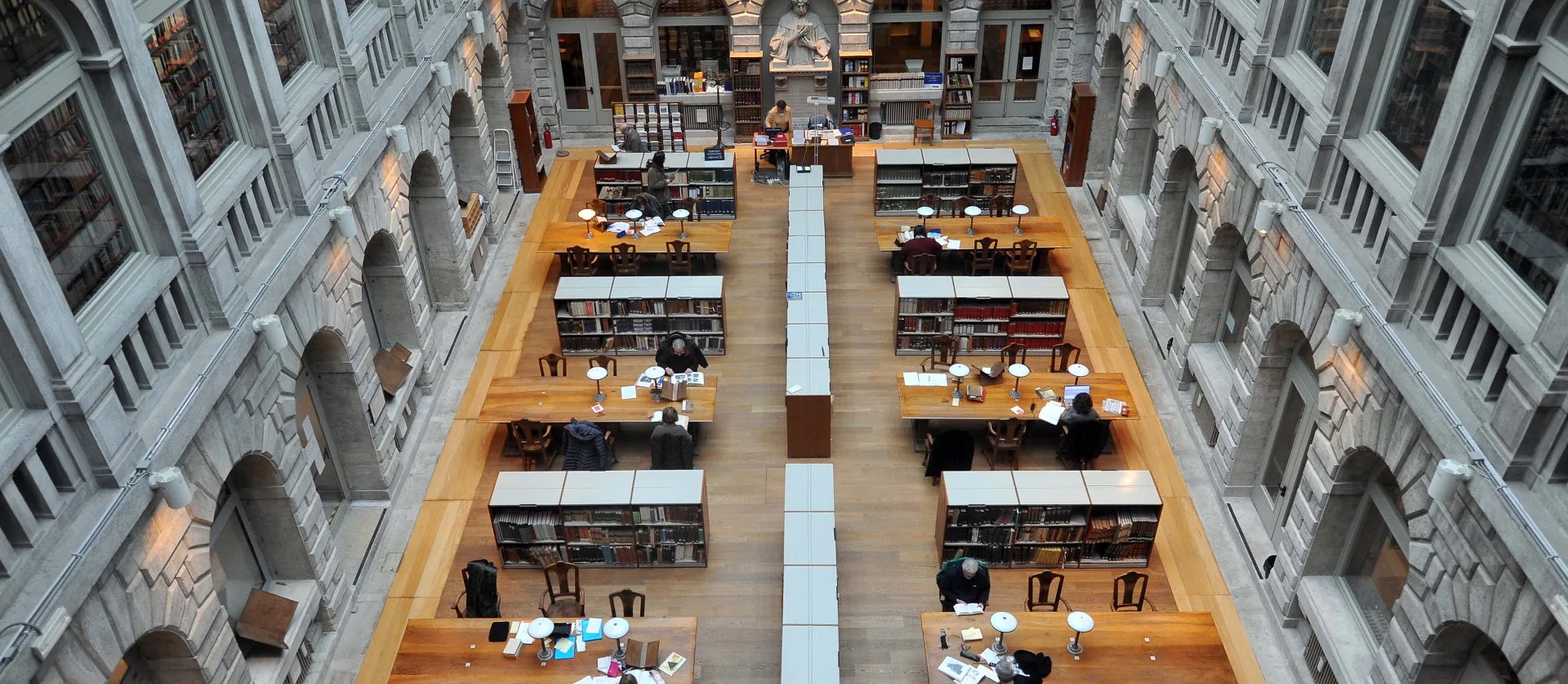
During his stay in Venice in 1362, Petrarch came to believe that the lagoon city would provide a worthy home for his library.
In agreement with the Chancellor of the Republic, Benintendi de’ Ravagnani, a proposal was submitted to the Venetian government: the distinguished poet would bequeath his books to St Mark the Evangelist, “provided that they cannot be sold or separated”, and that they be kept “in a safe place… away from fire and rain”, so that they might be preserved “in perpetuity for his glory and for the benefit and delight of noble and learned citizens”.
This collection was intended to form the nucleus of a larger public library, around which further manuscripts would be gathered, encouraging other citizens—patricians and foreigners alike—to leave their books to the city at their death. “Thus”, Petrarch envisioned, “a rich library will one day be formed, equal to those of the ancients.”
In return, he requested a residence in which he could live until his death and where he could house his books.
On 4 September, the Great Council accepted the proposal, “considering how much it would bring praise to God and to the blessed Mark the Evangelist, and honour and fame to our city”, and granted the poet a house with two towers on the Riva degli Schiavoni.
The Procurators of St Mark were charged with identifying a suitable place in which the books could be preserved after his death.
Petrarch already imagined a future Venetian library to be built in a public location near the seat of government, in the “main square of the city, which I believe cannot be compared in beauty to any other, and in front of the Basilica, which shines with marble and gold”.
It was a remarkably far-sighted conception of a public library.
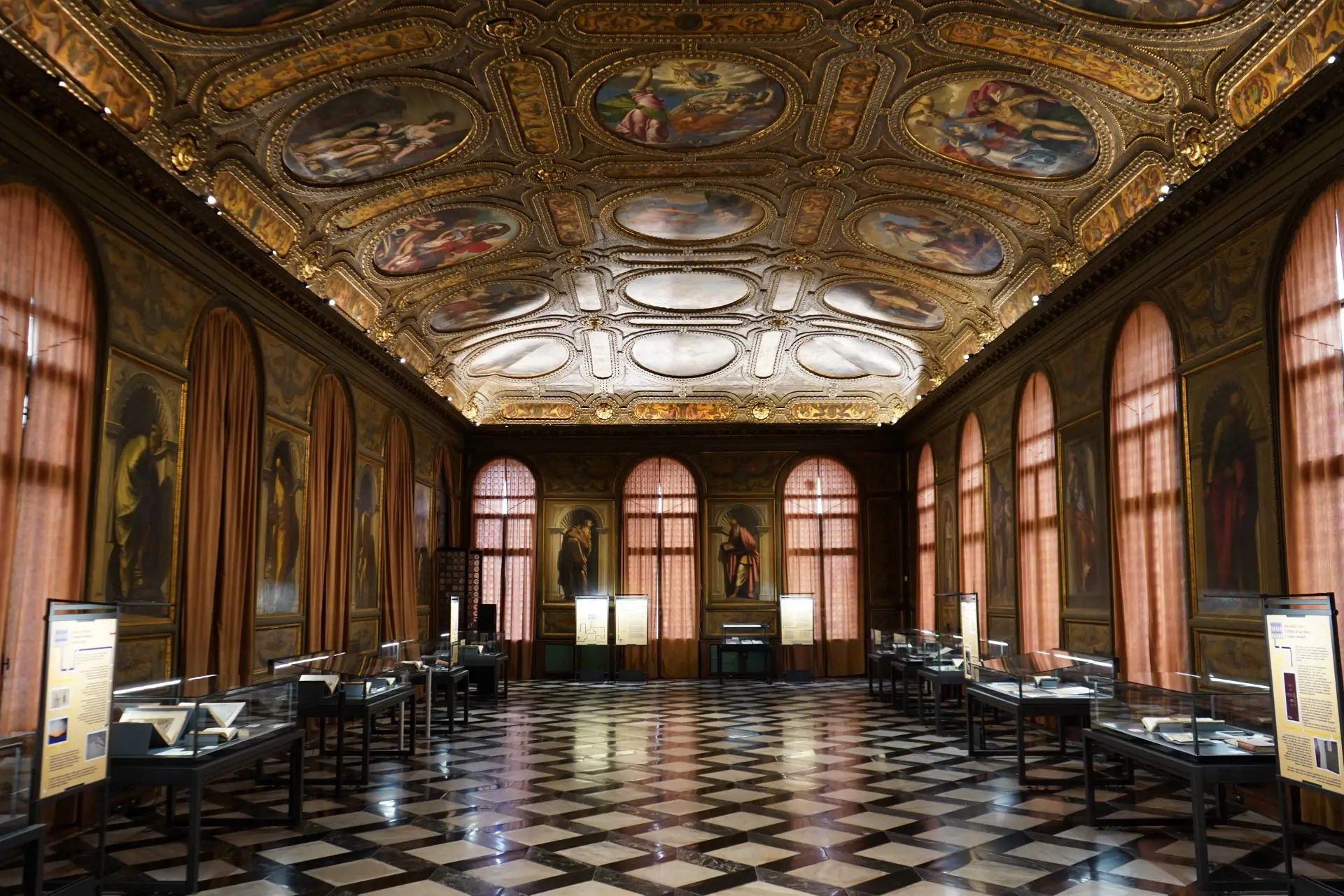
The project, however, was never realised, though the later Library of San Marco would draw inspiration from this idea.
In the early summer of 1367, Petrarch left Venice for Pavia by river.
Whether prompted by the lukewarm reception from Venetian intellectual circles (the so-called “ingiuria degli aristotelici”, or “attack by the Aristotelians”), by changing political circumstances and the death of Benintendi, or simply by a change of heart, his departure became definitive, and his books were destined elsewhere.
By 1368, the manuscripts had reached Padua—where he held a canonry—and Arquà, his final residence, granted to him by Francesco Novello. After Petrarch’s death in 1374, the Carraresi family acquired the finest part of the collection.
Although some volumes were dispersed, a substantial portion entered the library of Francesco da Carrara, Lord of Padua.
In 1388, that library merged with the Visconti (and later Sforza) library in Pavia. From there, it eventually passed to Louis XII of France and is now preserved in the Bibliothèque nationale de France.
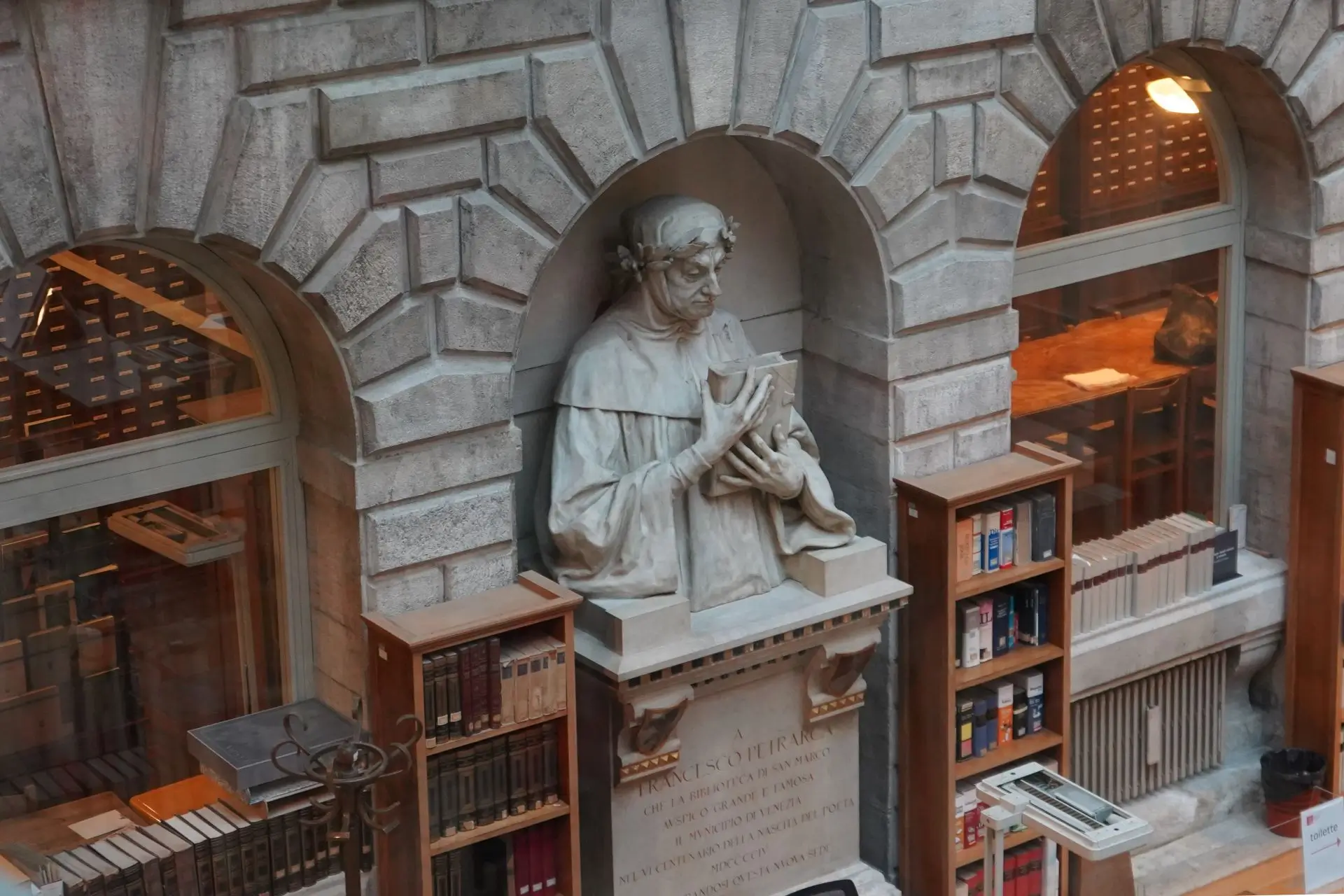
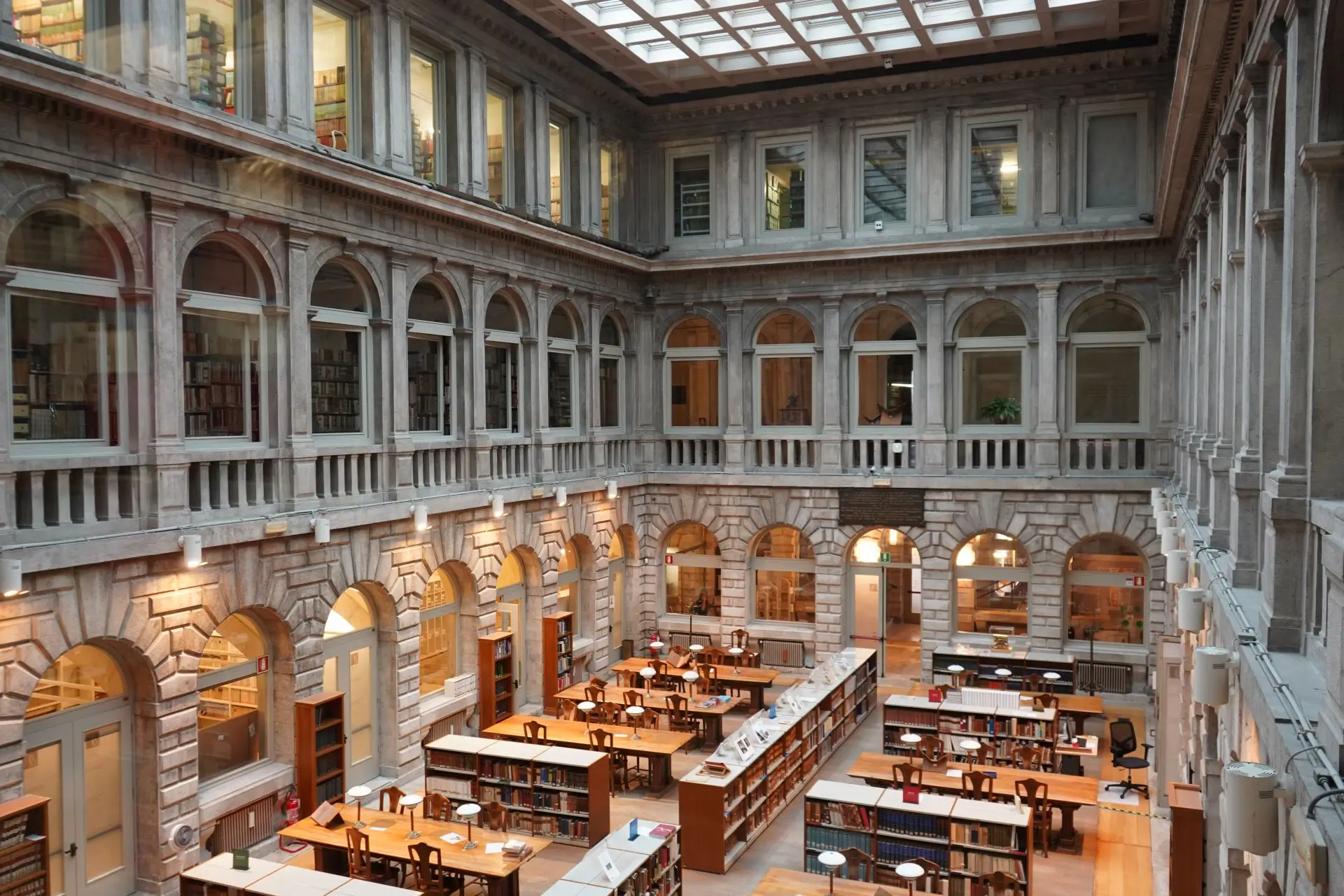
The legend of Petrarch’s books in Venice
A suggestive legend, which has captivated generations of scholars since the seventeenth century, held that the remnants of the substantial and mysterious library that Petrarch had destined for Venice in the deed of donation of 1362 were to be found between the Doge’s Palace and the new Library of St Mark, built in the meantime.
The group of manuscripts, identified at the time of their discovery as “Petrarchan”, proved in reality to be little more than a “small treasure” of neglect and carelessness, as well as of items deliberately discarded.
Among the Marciana manuscripts
The Marciana preserves a codex of the Epistolae familiares, copied for Petrarch in 1363–64 (Lat. XIII, 70 = 4309). Petrarch’s own hand has been identified in annotations accompanying the Odyssey, written and translated in the margins by Leonzio Pilato (Gr. IX, 29 = 1007).
A late fourteenth-century manuscript (Lat. VI, 86 = 2593), containing the De remediis utriusque fortunae—a work completed by Petrarch in 1366 and formerly belonging to the Dominican convent of Santi Giovanni e Paolo—includes, on fol. 224v, explicit reference to the controversy that arose during Petrarch’s Venetian stay. Four interlocutors described him as “sine litteris virum bonum” (“a good man without learning”): the Venetians Leonardo Dandolo, Tommaso Talenti, and Zaccaria Contarini, together with Guido di Bagnolo of Reggio Emilia. Their position sought to reaffirm the Averroist intellectual tradition rooted in Venice, in contrast to Petrarch’s Platonic and proto-Humanist orientation.
The illuminated initial on fol. 1r of the same manuscript contains a refined portrait of the poet.
Further reading
- Albinia C. de la Mare, The Handwriting of Italian Humanists, I/1, Oxford, Oxford University Press, 1973.
- Nereo Vianello, “I libri del Petrarca e la prima idea di una pubblica biblioteca a Venezia”, in Miscellanea marciana di studi bessarionei (a coronamento del V Centenario della donazione nicena), Padua, Antenore, 1976, pp. 435–451.
- Susy Marcon, “Osservazioni sugli aspetti materiali del ‘codice Cumanico’ (Marciano Lat. Z. 549 =1597)”, in Il codice Cumanico e il suo mondo, edited by Felicitas Schmieder and Peter Schreiner, Rome, Edizioni di Storia e Letteratura, 2005, pp. 73–102.
- Filippo Maria Pontani, “L’Odissea di Petrarca e gli scoli di Leonzio”, in Francesco Petrarca e il mondo greco, Quaderni petrarcheschi, 12–13 (2002–2003 [2007]), pp. 295–328.
-