

Book and archival heritage
CHOOSE WHAT YOU WOULD LIKE TO EXPLORE
When the Library of St Mark opened to the public in 1560, its holdings consisted solely of the donation made by Cardinal Bessarion, but by the end of the century further bequests had already contributed to the growth of its heritage. In addition to bequests and donations, in 1603 the Venetian government required printers to deposit a parchment-bound copy of every book published within the territories of the Republic. From 1725 onwards, the Library was assigned dedicated funds for the acquisition of new books; these allocations increased over the course of the eighteenth century, enabling a substantial expansion and updating of the collections. Between the late eighteenth century and the period of French rule in the early nineteenth century, the Marciana further augmented its holdings through the incorporation of parts of monastic libraries. Manuscripts, printed works, and documentary collections from the offices of Venetian magistracies—including the Council of Ten and the Senate—were also transferred to the Library. In 1910, the Italian State reinstated the legal deposit requirement for works printed in the province of Venice, which had been suspended in 1866. Under current legislation (Law 106/2004 and Presidential Decree 252/2006), and pursuant to the agreement with the Veneto Region of 22 January 2009, the Biblioteca Nazionale Marciana is designated as the legal deposit library for publications issued in the province of Venice. Today, the Library continues to expand its collections through the acquisition of both modern and rare materials, in accordance with its acquisition policy.
The significance of the Library’s book and archival heritage
The significance of the Biblioteca Nazionale Marciana’s book and archival heritage lies in the remarkable richness and value of its manuscript and printed collections. The manuscript holdings are distinguished by their literary, philosophical, and patristic content, and constitute a fundamental testimony to ancient, medieval, and humanistic-Renaissance culture.
- The historical nucleus is Cardinal Bessarion’s collection, through which the two most celebrated manuscripts of the Iliad have been transmitted: the so-called Homerus Venetus A (10th cent.) and Homerus Venetus B (11th cent.), as well as the Anthologia Planudea (1299–1301), which, together with the Anthologia Palatina in Heidelberg, represents a precious witness to Greek epigrammatic poetry.
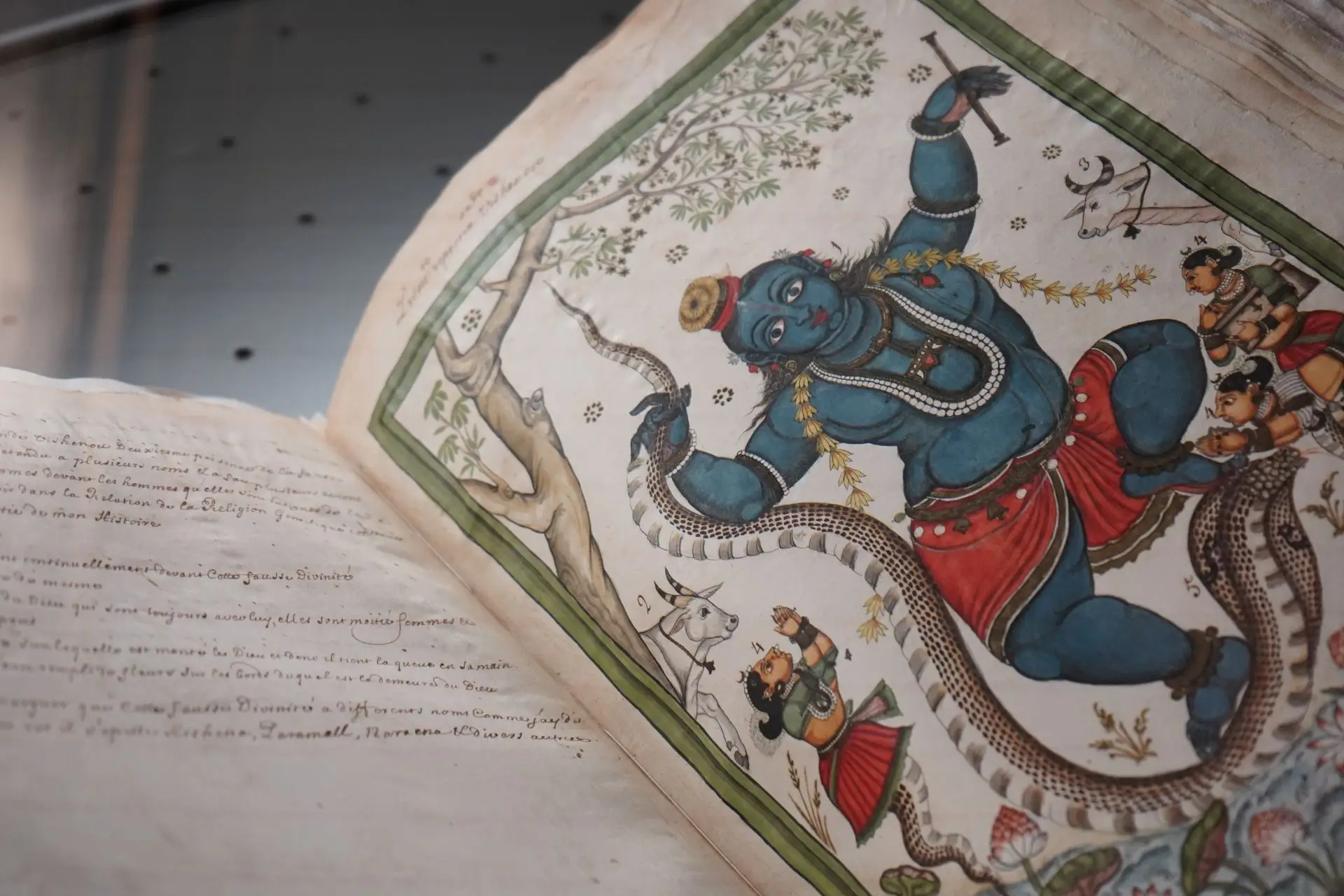
- Among the manuscripts preserved by the Library are numerous examples of the art of illumination, both from the Venice area and from other traditions.
The thirteenth-century Psalterium with twenty-four full-page miniatures is of English origin; the fourteenth-century Officium of Queen Mary of Navarre is Iberian; the celebrated early sixteenth-century Breviarium, formerly owned by Cardinal Domenico Grimani, is Flemish, as is the Utrecht Book of Hours of the same period; the sixty-six miniatures accompanying the fifteenth-century Poem of Alexander by Ahmedi are of Ottoman
The extensive decoration of the Missale Romanum, produced in the fourteenth century for use in St Mark’s Basilica, is Venetian in workmanship; the manuscript of Dante’s Commedia from San Giorgio Maggiore (14th or early 15th cent.) is from the Veneto-Emilia area.
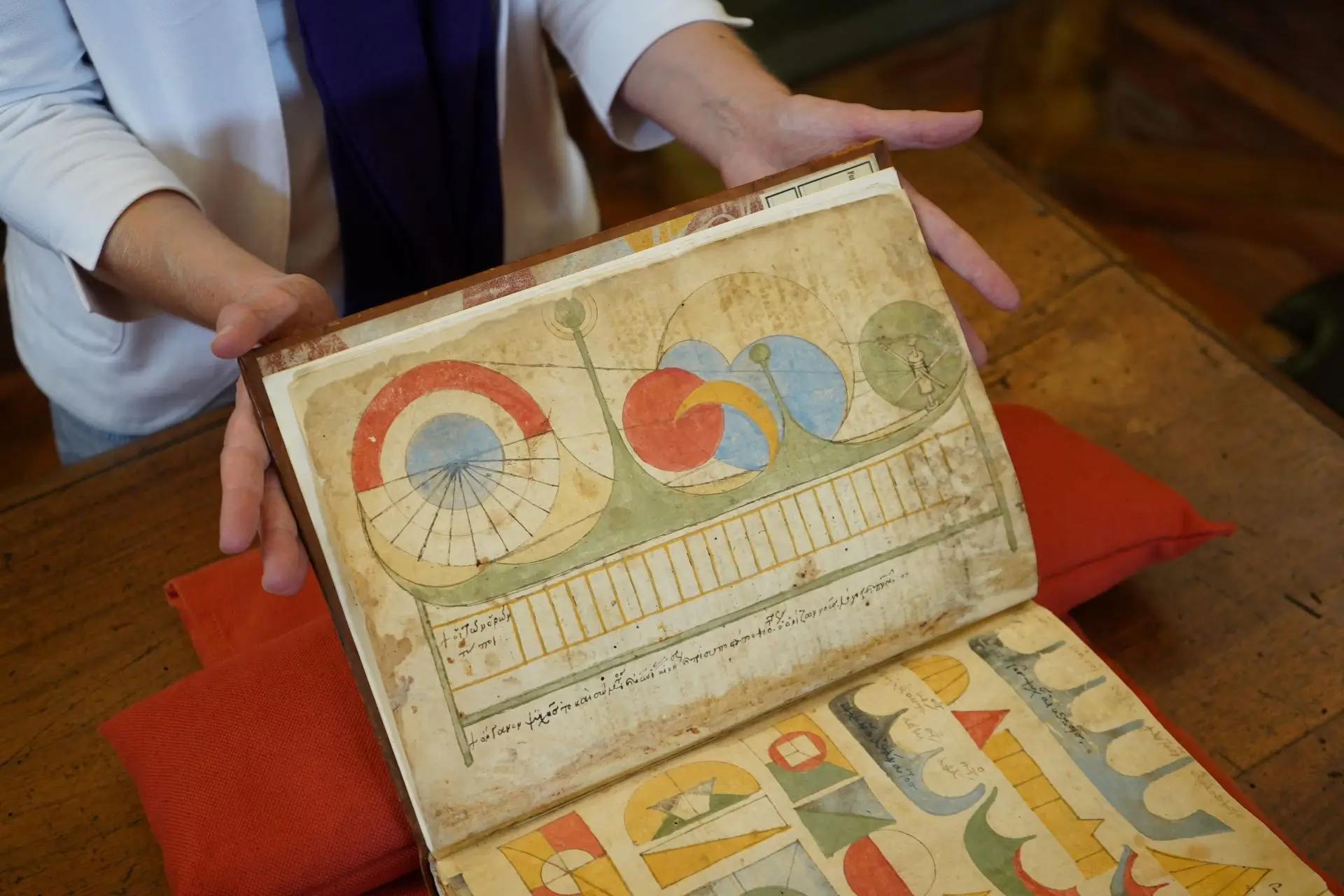
Of notable elegance and rich decoration are the manuscript of Pliny’s Naturalis Historia, copied in 1481 for Giovanni Pico della Mirandola, and the Evangelistarium Grimani (1528), with miniatures by Benedetto Bordon and Giulio Clovio. - Among the manuscripts on scientific or naturalistic subjects are the Liber de simplicibus, formerly owned by Benedetto Rinio and produced by the physician Nicolò Roccabonella and the painter Andrea Amadio (15th cent.); the De architectura by Antonio Verulino, known as Filarete (15th cent.); and the remarkable corpus constituted by the Tabulae anatomicae of Girolamo Fabrici d’Acquapendente (17th cent.).
- Particularly notable among the numerous manuscripts on Venetian and Veneto subjects are the Diarii of Marin Sanudo, in fifty-eight autograph volumes. Also preserved here are the wills of the Polo travellers: Marco the Elder (1280), Maffeo (1300), and the famous Marco Polo (1324), author of Il Milione.
- The map collection includes the remarkable World Map by Fra’ Mauro, the Atlas by Andrea Bianco (1436), and the wooden matrix of the Turkish-Venetian World Map (1559). Also notable is the edition of the Veduta di Venezia by Jacopo de’ Barbari.
- Among the printed works are the editions of Conrad Sweynheym and Arnold Pannartz donated by Bessarion and bearing his coat of arms; the first book printed in Venice by Giovanni da Spira in 1469, Cicero’s Epistolae ad familiares; and the subsequent editions by Giovanni and Vindelino, including the editio princeps of Petrarch’s Canzoniere and Trionfi (1470), as well as many other fifteenth-century Venetian editions, the rich collection of Aldines, and the collection of eighteenth-century Venetian newspapers.
- The musical collections are also significant, including several autograph manuscripts by Benedetto Marcello and other Venetian composers, as well as an important collection of theatre librettos.
- Finally, mention should be made of the collection of the artist Mariano Fortuny y Madrazo, consisting of graphic materials and a photographic archive.
- Among the numerous precious bindings, the Byzantine examples are inestimable: one dating from the late ninth to early tenth century, one from the tenth, and three from the fourteenth.
Today’s heritage
The Library’s current holdings consist of:
- approximately 1,000,000 volumes
- 13,117 bound manuscripts
- 4,639 unbound manuscripts
- 2,887 incunabula
- 24,060 sixteenth-century editions
Further reading:
- Biblioteca Marciana. Venezia, edited by Marino Zorzi, Florence, Nardini, 1988.